Showing posts with label Side trips. Show all posts

New Jersey Skyland region: Ringwood Manor

The Skylands Region located in the Northern and Central part of New Jersey, a little bit more than  an hour from New York. I wrote about one of the parks in Skyland, New Jersey Botanic Garden, in one of my posts.
Ringwood State Park Manor,  located a few miles away from New Jersey Botanic Garden, features both wild lands and landscaped gardens.  The park is named after Ringwood Manor, a large mansion containing collection of relics from the iron-making days.  There are a lot of iron gates  standing  without attached fence all over the garden near the house.

Cornelius Board, a Welsh miner, was probably the first person to mine for iron in the Ringwood area. He was followed shortly thereafter by the Ogden family who established the Ringwood Company and built the first blast furnace in 1742.
Ringwood was very important as a strategic location during the American Revolution. The iron mined at the site helped to supply the Continental Army. In 1807, Martin J. Ryerson purchased the historic ironworks and began building the first section of the present Manor circa 1810.


New York's Peter Cooper, an inventor and industrialist, and his young son-in-law, Abram S. Hewitt, purchased Ringwood in 1854.
Cooper and Hewitt were the major supplier of gunmetal to the Union cause during the American Civil War.  The forges, mills, and farms   gradually turned into the Victorian summer estate of the Hewitts.

 The completed house of 51 rooms was built in a wide range of styles that characterized the Victorian period with the interior furnishings equally eclectic since the Hewitts were avid collectors and traveled extensively around the world.
Eventually, the iron industry moved further west in America and Ringwood's iron mines finally closed.  In 1938, the Hewitt family donated Ringwood Manor and its contents to the State of New Jersey.

There are very pretty picnic sites near a rolling stream in the park.The best time for barbeque is  late September or early October( as on the photo) , when it is not hot and the leaves turn gold.

New Jersey Skyland region: Botanic garden


There are two beautiful parks  in  the Skyland region of New Jersey,  hour and fifteen from New York , sitting  very close  to each other.  The first one is New Jersey Botanic Garden  and the second is  Ringwood Manor. I  have been there  several times, in spring and summer, and early fall.   The parks are beautiful at any time of year.  If you plan to visit the parks start with the Botanic garden and then move to Ringwood manor park where you can have a barbecue on almost private lot near the bubbling brook.
The layout of the annual formal garden in New Jersey Botanic Garden has not been changed from the original design. The displays in this garden therefore change not only through the seasons, but also from year to year.


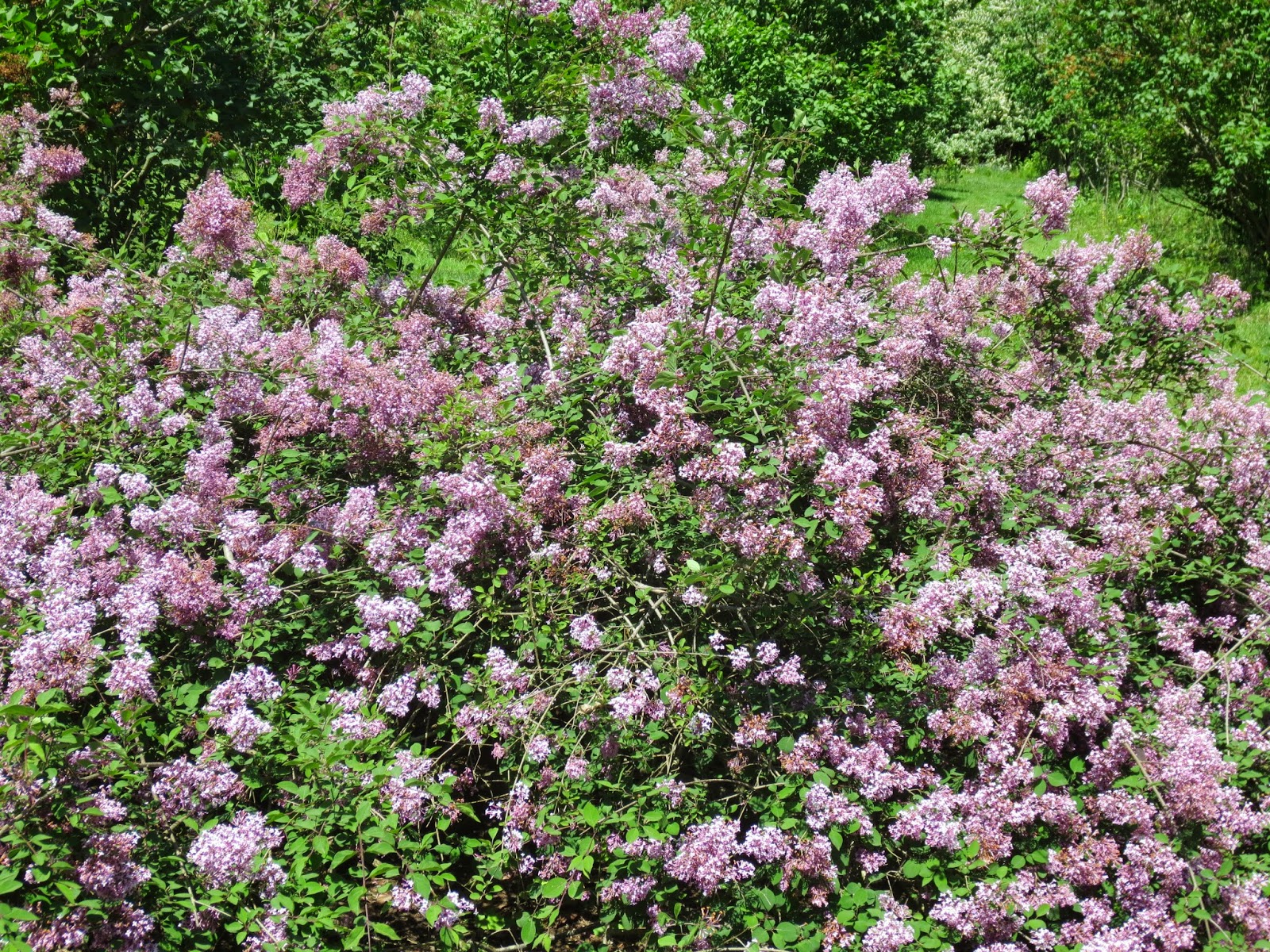
 It is a very popular place to make wedding pictures. The trails in New Jersey Botanic Garden wildflower area are beautiful, with flame azaleas, water lilies, frogs in the pond, and lots of little nooks and crannies to explore.  New Jersey Botanic Garden has extensive lilac collection with over one hundred varieties. 


The lilacs  garden is at its best near the middle of May.  There is a Crab Apple Allée and the  fenced-in Rhododendron Garden with  a large collection of hostas.


The story of the garden starts in 1801, when the land was cleared for farming. The first owner of the property was  Francis Lynde Stetson who named his country estate "Skylands Farms" and maintained a stylish mansion of native granite and a working farm. He was a  prominent New York lawyer and    entertained  Skyland  such friends as   Andrew Carnegie  and J.P. Morgan.

Skylands was sold in 1922 to Clarence McKenzie Lewis,  an investment banker and a trustee of the New York Botanical Garden.  The house and gardens were a joint project between the   Lewis and his mother, Helen Forbes Lewis Salomon, the widow of William Salomon, founder of Salomon Brothers, the New York investment banking firm. The Stetson house was torn down, and the current Tudor mansion of native granite was built on the site. The  ground floor of the house includes exquisite antique panels, fireplaces, and stained glass collected from estates and castles throughout Europe.


 For thirty years Lewis collected plants from around the world, resulting in one of the finest collections of plants in New Jersey. 
Clarence Lewis sold the Skylands estate and its contents in 1953, at least partly because he could no longer get enough help to keep the gardens in pristine condition. The buyer, a small college, occupied the property until 1966, when it was sold to the state of New Jersey.


The New Jersey State Botanical Garden is open every day  from 8 a.m. to 8 p.m., admission is always free,  but on summer Saturdays, Sundays, and holidays from Memorial Day weekend to Labor Day, there is a State parking fee of $5 for New Jersey-registered vehicles and $7 for non-New Jersey-registered vehicles.  In May , when lilacs are in bloom you have to arrive early- otherwise you will not be able to find a free parking space!  .
The Skylands Manor is one of New Jersey’s premier destination wedding sites. You and your guests can stay in one of our 24 beautifully appointed glamorous suites or overnight rooms. If the house is not booked for the events  it works  as a hotel. But  not all the rooms have the private bathrooms and the  reviews are not so good on Tripadvisor.

Seward Johnson, the founder of "Grounds for Sculpture"

Seward Johnson, the grandson of Robert Wood Johnson (co-founder of Johnson and Johnson) and a cousin of actor Michael Douglas was born in New Jersey in 1930. He grew up with five siblings and went to serve four years in the navy during the Korean War. His earlier work focused on painting, after which he turned to sculpture in 1968. Having no formal training beyond a series of classes in Cambridge, MA, his first cast work of sculpture won the Award in Steel Art competition which included 7,000 entries.
Auto portrait 

Seward Johnson's works are exhibited internationally and are included in private collections, museums, and public art collections.
There are three distinct series of his works:" Celebrating the Familiar man", "Icons Revisited" and "Beyond the Frame" series, that over 30 works based on Impressionist and Post- Impressionist masterworks.
In 1974, Johnson founded the Johnson Atelier Technical Institute of Sculpture- an educational, non-profit art casting and fabrication facility. Right next to the Atelier Institute there is one of the best sculpture parks in the world, also founded by Stewart Johnson.
  You can read more about the park "Grounds for Sculpture" in one of my posts.
"Double Check"

In 1982 sculpture created “Double Check,” a life-sized bronze of a businessman, sitting on a metal bench in Liberty Park and making final preparations before heading into a nearby office building. Liberty Park and the statue were heavily damaged when New York City was terrorized on Sept. 11, 2001. In the days following the 9/11 attacks, Johnson’s sculpture became a memorial as first responders and passersby decorated it with flowers, flowers, notes and candles.

 Before 9/11, the sculpture was simply part of the downtown landscape. Afterward, it became an icon. Seward Johnson, sculptor and the owner of the sculpture, has called his sculpture an iconic "stand-in" for those who didn't make it.

Edouard Manet "Le Dejeuner Sur L’herbe"

Henri Matisse "Dance"
J. Seward Johnson Jr. s recent work focuses on recreating well-known nineteenth-century paintings that allow the viewer to step inside and experience the two-dimensional work in three-dimensional reality. “I want my work to disappear into the landscape and then take a viewer by surprise. After he gets over the shock of being fooled, it becomes an emotional discovery. Then he owns the sculpture. People often revisit their favorites. They become like friends." said Seward Johnson.

Claude Monet "La Terrasse A Sainte-Adresse"
Seward Johnson's 'Were You Invited?' is inspired by French Impressionist Pierre Auguste Renoir’s nineteenth-century masterpiece, 'The Luncheon of the Boating Party'. Sculptor renamed the painting Were You Invited? and recreated it in 3D. The viewers can actually step into the scene and mingle with the diners.
In addition to the members of the Impressionist’s boating party are four figures seated around another table at the far end of the tableau. Joined in convivial conversation are realistic representations of sculptor Johnson himself with artists Bill Barrett, Red Grooms, and Andrzej Pitynski
Pierre Auguste Renoir "The Luncheon of the Boating Party"
  Steward Johnson is 83 now but he remains active in the art community. He also publishes a science magazine, works as president of an oceanographic research institution in Florida, and is the founder of an off-Broadway theater "The Joyce and Seward Johnson Theater"   in New York. On May 4, 2014, Grounds For Sculpture opened the largest and most significant exhibition in its history—a presentation of work by its founder, Seward Johnson. The exhibit will feature more than 287 works, including 91 painted trays. Seward Johnson: The Retrospective will be on view through September 21, 2014.

Grounds of sculpture, park in New Jersey


An  hour and a half drive from New York  and several miles from   Princeton University, one of the eight universities of the Ivy League,   there is one of  the world’s most impressive sculpture gardens   – Grounds for Sculpture.  Park is huge- about 42 acres. The permanent collection include over 270 sculptures  and seasonal exhibitions in eight galleries.  The mission, according to the organization’s Web site, is to “promote an understanding of and  appreciation for contemporary sculpture for all people.”


Grounds For Sculpture is also a garden and arboretum  with   paved terraces, pergolas, courtyards, lake and ponds.   The grounds are arranged so that you never know what to expect  over any small hill.  
 A surprise awaits you around every corner. The sculptures cover all types of art styles from classical to modern   and are almost hidden, waiting for you to find them in secret garden. There is a   walled garden  with a set   of very clever fountains. You will not be able to put away your camera the entire time you are there.


There are about one dozen peacocks   freely wandering around.  They have enchanted visitors of all ages by displaying their beautiful trains or surprised and delighted those who spotted them strolling the park with newly hatched chicks. Two years ago, one very rare white peacock was added to the group.  


The kids can run around the park and touch or even climb the art. There is a  warming hut in the center of the park where you  can to sit by the fire  in the cold months.
 The is a Peacock café near the central entrance to the park.  In a good weather you can pack your food in a picnic basket    and have a lunch  in the gorgeous Acer Courtyard or   throughout the park.  The food is overpriced but you can pack a lunch at home and just buy tea or coffee, as I always do.
 
 At the other end of the park there is an upscale Rat’s restaurant , featuring country French cuisine. It  is probably New Jersey's best-decorated restaurant.  It  was   designed by  the founder of the park John Seward Johnson II, with an impressionist Claude Monet-styled atmosphere.   It is named after the character "Ratty"  The Wind in the Willows,a classic of children's literature by Kenneth Grahame, first published in 1908.


Every year there is something new in the park -  the park's outdoor collection grows by fifteen sculptures annually. There are about   four hundred fifty reviews of the park on  Tripadvisor and   85 percentage of the visitors rated the park as “excellent”.
Grounds For Sculpture is located on a site that was formerly part of the New Jersey State Fairgrounds. Fairs were held occasionally in Trenton Township since 1745 when King George II granted a royal charter allowing them for the purpose of buying and selling livestock and other merchandise. This charter provided for the first fair in colonial America.  In 1980 the land was sold and the New Jersey State Fair was held for the last time on this site.
 
Construction on the sculpture park began in 1989 and  Grounds For Sculpture opened to the general public in 1992. In one of my next posts  I will tell more about the history of the park and its’  founder J. Seward Johnson, Jr.


Old Westbury Gardens, Long Island Estate


Twenty five minutes from mid-town Manhattan, the village of Old Westbury on Long Island’s North Shore, the most southern extension of the famed Gold Coast,  has one of the top ten wealthiest zip codes in America.  At the turn of the last century, Long Island's Gold Coast was the most fashionable escape for America's wealthiest citizens. Old Westbury Gardens is perhaps the most recognizable of all Gold Coast estate,  most of which date to around the beginning of the twentieth century .

Jay Phipps, son of Henry Phipps, who had made his fortune in the steel industry, had bought over 175 acres of Long Island property, dotted with Quaker homesteads.  Jay was the son of a Henry Phipps, a shoemaker from England who was   childhood pals with   Andrew Carnegie.
An English Restoration-style manor house,  completed in 1906,  was built by Jay and his wife    Margerita (Dita) Grace, of the Grace shipping family.   The story is that Jay persuaded Dita to marry him with a promise of an English manor house and gardens for her, like those in which she lived during her teens.


Jay and Dita raised four children in this home, living here from September to January of each year. Westbury House was a happy house for a large happy family- it was  filled with children   and their beloved dogs. 


 Prior to his death in 1957,   Jay set up a trust in order to preserve the estate.  
Their only daughter  Peggie (Margaret) , became chairman of the Old Westbury Gardens, Inc. and remained active until her death in 2006, two months shy of her 100th birthday.   


In 1920s Jay purchased several large properties in West Palm Beach, Florida  where he built a large   oceanfront mansion.  Today, the property is occupied by his granddaughter, Susan Phipps Cochran, and her husband.


Since 1958,  the public has been allowed to roam the gardens and take tours of the manor house.


The magnificent
 Charles II-style mansion is nestled amid 200 acres of formal gardens  with more than 100 species of trees, landscaped grounds, woodlands, ponds and lakes.  There is a circular rose garden, thatched cottage and an Italianate walled garden with trees trained to grow in the shape of candelabras.  There are grand vistas down rows of linden and beech trees.


The  main entrance gates were created in the early 1700’s and later, in 1918,    discovered   by Westbury House designer George Crawley. The gates were shopped to New York in 1920. In the center of the arch is the face of Janus—the Roman god whose image was portrayed with two faces pointing in opposite directions or on the verse and reverse.  Above the image of Janus is Phipps’s initials “JSP” enclosed in a cartouche.  


Westbury House and the Gardens have been featured in many movies and TV episodes, such as  North by Northwest (directed by Alfred Hitchcock  in 1959) , Love Story  (1970, directed by Arthur Hiller) Age of Innocence, 1993 and Wolf, 1994, starring Jack Nicholson & Michelle Pfeiffer.


The house and gardens are magnificent.  Visitors can easily spend several hours here. This is a beautiful place to go any time.  In winter you can have pictures with Santa  for  free.  For Halloween, there is an evening glow-in-the dark pumpkin walk, with pumpkin carvings, all lit up at night. 
There is  a Café in the woods and  picnic tables very close to it.   $10 a person includes parking, the grounds/gardens and a guided tour  (every half hour) of the house.   In  summer there are outdoor classical concerts and classic car show (June 1, 2014)