Showing posts with label Midtown. Show all posts

New York Diamond District, Part 2

Diamonds are sold on diamond exchanges called bourses. There are 28 registered diamond bourses in the world.  The World Federation of Diamond Bourses  (WFDB) was founded in 1947 and united all diamond exchanges under  roof. 

New York bursa is named DIAMOND DEALERS CLUB (DDC). DDC was found in 1931 when a group of   diamond dealers gathered together in an office in lower Manhattan, where at the time New York’s diamond business was centered.  

According to New York legend, a diamond was dropped and apparently lost, when two diamond dealers were examining it.  Later missing diamond stone fell from a pants cuff of one of the dealers. At that point, it is told, he concluded that American diamond dealers should follow the initiative of their European colleagues and organize a secure facility in which to conduct business. In 1993 DDC moved  its offices and trading platform to  580 Fifth Avenue, at the corner of 5th avenue and 47 street.
The first building had 11 floors and was built in 1925.  In 1929 famed architects of their era, Warren & Wetmore ( they built Grand Central Station)    were hired by the owner   to design a 33-story Art Deco building, to be known as the Empire Trust Building. 580 had to be built on top and around the original building. Once completed, 580 Fifth Avenue became one of the tallest buildings in New York City.DIAMOND DEALERS CLUB  has its own synagogue  and a  kosher luncheonette.  Business in the DDC is conducted using rules that have been around for generations.  


The deals are based on honesty and trust and there are no written contracts.  DDC bylaws state that  “Any oral offer is binding among dealers, when agreement is expressed by the words ‘Mazel and Broche’ or any other words of accord.” 

 DDC become the first official diamond exchange to launch a first fully functional online diamond trading floor in 2011.

New York headquarters  of the Gemological Institute of America (GIA) , the world’s largest gemological institute,  was  located at the same building as  DDC. GIA is the inventor of the “four C’s” (cut, clarity, color, carat) and educated consumers know to request GIA certification.  

 The institute  has 11 campuses and nine laboratories in 14 countries and serves as the standard-setter for the jewelry industry.

In June 2013 one of the most productive developers   Extell Development Co  opened   Gem Tower skyscraper on West 47.  As of July 2013, more than 80 percent of a three-story space in the building dedicated to a shopping center for precious gems had been leased.  Gemological Institute    acquired three full floors and nearly 80,000 square feet of space in the newly built   skyscraper. 
Gary Barnett  (Gershon Swiatycki ) is President and founder of Extell Development . His father Chaim Swiatycki was a rabbi and Talmudic scholar. Barnett began his career as a diamond trader in Antwerp, Belgium in the 1980s. I wrote about one of the latest Extell developments building, New York's tallest residential  building One57, in one of my old posts.


New York Diamond District, Part 1

Almost 80% of the world's diamonds are sold in New York, in Diamond District. A year-long study that was done several years ago found that jewelry, diamonds and gold were three of New York State’s top four exports.

The name diamond is derived from the ancient Greek αδάμας (adámas)  -  “unbreakable”   and have been treasured as gemstones since their use as religious icons in ancient India.  Most natural diamonds are formed at high temperature and pressure at depths of  87 to 120 miles  in the Earth's mantle. The diamond is uniquely resistant to damage by heat or scratching, and can be cut or polished only by another diamond. The mid-nineteenth century discovery of diamonds   in South Africa sparked the world's biggest diamond rush.
There are a limited number of commercially viable diamond mines currently operating in the world.  There is only one   non-commercial diamond mine - The Crater of Diamonds, an Arkansas State Park  that is open to the public.
Diamonds were very popular in the middle ages.  Many large and famous stones   such as the Koh-I-Noor and the Blue Hope were found in India at that time. You can read about Blue Hoope - the Moonstone in one of my posts.
Until the mid-1940s the jewelry trade was headquartered downtown, at Maiden Lane. In  1923 Fenimore C. Goode, a broker, promoted construction of a new building at 20 West 47th Street specifically to tempt the Maiden Lane firms to move.
There are more than 4,000 independent businesses in the Diamond District now, and nearly all of them are related to diamonds or fine jewelry. This block brings in $24 billion a year to New York. The district employs 22,300 workers, and another 10,000 if you include indirect employees.
 About 95% of the traders and workers are Jewish and many are Hasidim. During the Spanish Inquisition of 1492 the Jewish diamond merchants had to leave Spain and set up shops in Amsterdam.  Because diamond cutting required very little equipment other than some hand tools, the Jews soon made Amsterdam  the diamond capitol of Europe.    During WWII  the Jews that escaped fled to the United States.

Renée Rose Shield in her book “Diamond Stories: EnduringChange on 47th Street” wrote: “ The diamond, a pebbly object transformed into a twinkling, astronomically priced jewel, has allowed Jews to transform themselves from rejected refugees of one country to respected businessmen of another.”


There is a small Radio City Synagogue on the third floor of 30 W. 47th St.   There is  Manhattan’s only Bukharan kosher eatery, Taam-Tov in N41 where you can have Shish kebabs and pilafs.


For 58 years, 41 W. 47th St. was home to the Gotham Book Mart (the name was inspired by Washington Irving).    The store specialized in poetry, literature, books about theater, art, music and dance. The store virtually played as a literary salon, hosting  poetry and author readings and art exhibits.  American writer Arthur Miller said  about the store: “ It's impossible to imagine New York City without it."  


Fanny Steloff,  the owner of the store that was open  in 1920, died in 1989 when  she was 101.  The house was purchased in 1946 for $65,000 and sold in 2003 for $7.2 million to Boris Aranov, who   owned another adjacent building.

Celebrity roasters and Time Capsule in Friars Club

     More than 100 years ago press agents met once a week at Browne’s Chophouse, in Manhattan to talk about their problems.  Later   the actors and musicians started to join them.  

     “The group realized they needed a broader name to incorporate the ever-diversifying membership. The term Friars stems from the Latin “frater” meaning brother – the perfect name for a fraternal organization whose motto would soon become Prae Omnia Fraternitas (brotherhood forever in Latin).”  
     The club made a name for itself being as vulgar and unorthodox as any group can be.  At the same time the members of the club  call their club house Monastery and add monastic labels to its officers: the Abbot is the head of the organization, the Dean is president.
     Their first club Monastery was on 107 West 45 street in the St James hotel.  The first Friars Frolic  ( as the club members named fundraiser event) was inaugurated in 1911, for which Irving Berlin wrote Alexander’s Ragtime Band. Frolics were successful, the number of the members was enlarging  and the Club purchased three lots on  West 48th Street and built it’s own house in 1916.
     This new Monastery had  suites for sleeping, a ballroom, dining room, poolroom, a gym, bars, and meeting rooms.  After the Great Depression the Friars lost their beloved building. During next 20 years the club had been hopping from one hotel to another. But the club survived and moved to their current  Monastery on 55th in 1957.
     This German Renaissance townhouse was constructed in 1909 as the private house for investment banker Martin Erdmann. In 1910, he lived here on his own income, with no family members, but with eight servants. Erdmann himself was born in New York, but his father was from Germany.  This is the only remaining house on what was once a residential block. The original deed of the house restricted the building’s usage from any noisy or smelly activities.
      The Friars Club   on 55th Street hosts about 175 events a year, including stand-up comedy shows, concerts and a film festival. The restaurant is open six days a week.  The club  has it’s club's legendary “roasts” in which comedians pepper a celebrity with good-natured insults. 

In 1949 with Maurice Chevalier, a French actor  and singer, as the guest of honor, the club members  held their first “Roast.” 

Lisa Lampanelli,  an Italian-American stand-up comedian, said: “A Friars Club roast is a great place to bring a drunken sailor who wants to learn some new words.”
The Friars Club started out as an all-male Club.  In  1988 the Friars welcomed women, and   Liza Minnelli  became the first official card-carrying female member. The list of celebrities- the members of the club -  is really long and includes Irving Berlin, Frank Sinatra, Elizabeth Taylor, Kirk Douglas, Barbra Streisand, Barbara Walters, Whoopi Goldberg, Donald Trump, John Travolta.   
     Club bylaws say a maximum of 30 percent of club members may come from outside entertainment . The club charges are correlated to the  member’s age: members under 40 pay half the cost of the initiation fee and annual dues, and those under 30 pay quarter of those charges. Admittance requires recommendation by two club members .
     New York Friars club celebrated its 100th birthday in 2006. At the celebration event Freddie Roman, the club's dean for the past 35 years, said: “We have some of the funniest people in the world here today. Our history is the history of show business. We survived vaudeville, burlesque, eight-track tapes, Chevy Chase's talk show and Mayor Bloomberg's smoking ban".
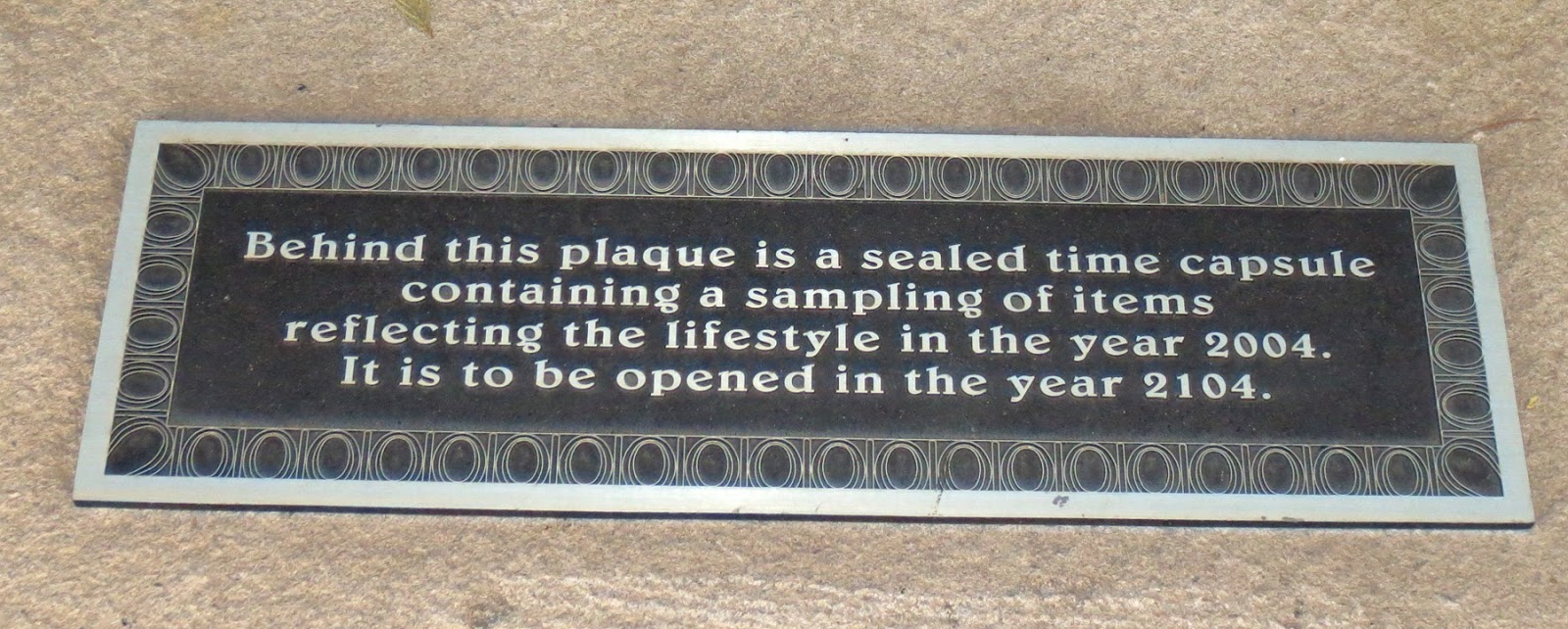
The club had recently opened an earlier “time capsule” buried a hundred years prior. The capsule had clippings from local newspapers like the World, The Telegram, The Times, The American, The Sun, The Herald, The Journal and the Tribune.

In the new capsule each Friar was offered a page in the new container Gregory Alexson was one such Friar and he told the story.

The Friars Foundation, established in 1977 , has raised over $5 million dollars to  help prepare the next generation of performers and musical artists through scholarship programs for students studying the performing arts.
Every year the Sunshine Committee during the holidays invites 1,500 underprivileged children to a movie screening at a mid-Manhattan theater. After the movie each child receives a “goody bag” filled with toys, hats, scarves, books and a variety of other items guaranteed to make their holidays brighter.

In 2004 the City of New York named the South East Corner of 55th Street “Friars Way.”

There is a joke of the day published on the Friar’s page. You can subscribe to Webmonk to have the joke delivered to you every day. 


The famous publisher William Hearst, “The greenest” skyscraper and castle in California. Part 2


Hearst Empire. Part 1

Hearst Corporation is one of the largest diversified media companies in the world. The corporation now includes about 200 separate businesses. Each day, nearly 20,000 people are at work at Hearst.  

     The founder of the corporation is William Randolph Hearst. He built the nation’s largest newspaper chain, his methods deeply influenced American journalism. He was a multi-millionaire  and a son  of a millionaire. A new building for Hearst corporation was built  in 2008 on the top of the old one,build on 1928. It is located near Columbus circle  and Central Park . 


     Hearst mother  left  him the family’s fortune, which included a 168,000-acre ranch in San Simeon, California half way between Los Angeles and  San Francisco.  Hearst spent his child years there and loved the place and built a castle on the lot of more than 15 square miles.

His  original idea was to build a bungalow, according to a draftsman who recounted Hearst's words from the initial meeting: I would like to build something upon the hill at San Simeon. I get tired of going up there and camping in tents. I'm getting a little too old for that.

     Construction started in 1919 and continued through 1947. There are 56 bedrooms, 61 bathrooms and  19 sitting rooms, indoor and outdoor swimming pools, tennis courts, a movie theater, an airfield, and the world's largest private zoo in the castle - so it is not a bungalow at all!

     The castle was designed by architect Julia Morgan - the first female graduate of the prestigious  "Ecole Des Beaux Arts"  in Paris. She was the first woman architect licensed in California. She started on the castle in 1919 and ended only by Hearst's declining health in 1947.   During her 45-year career, she designed more than 700 homes, churches, office buildings, hospitals, stores, and educational buildings. Julia wrote: ”Never turn down a job because you think it’s too small;  you don’t know where it can lead.”

     One of the highlight of the estate is the outdoor Neptune Pool, located near the edge of the hilltop. The Neptune Pool patio has an ancient Roman temple front ( not a copy!) , transported from Europe and reconstructed at the site.  The pool the holds 345,000 gallons of water and includes the oil burning heating system.

A tiled indoor Roman pool is styled after an ancient Roman bath. Hearst was affected by the beauty of the mosaics in the 5th Century Mausoleum in Ravenna, Italy and implemented  similar styles into his pool.


     Eight marble statues, decorating the pool, were carved starting in 1930 by Italian Sculptor  and are the  copies of ancient Greek and Roman statues. Hearst spent millions of dollars expanding the property, building a Baroque-style castle, filling it with European artwork, and surrounding it with exotic animals and plants.

     The Hollywood and political elite often visited the castle. There is a small private  airport   at the bottom of the hill. Guests also could take a private Hearst-owned train car from Los Angeles.  Charlie Chaplin, Cary Grant, the Marx Brothers, Charles Lindbergh, Clark Gable, Franklin Roosevelt and Winston Churchill were among Hearst's guests.

   In 1957, the Hearst Corporation donated the property to the state of California. Hearst Castle became a United States National Historic Landmark on May 11, 1976.  The site attracts about one million visitors per year and you can become one of them.  I was there several years ago. Believe me - it’s amazing!

     When Randolph Hearst left his castle for health reasons, he moved into this Beverly Hills mansion that girlfriend Marion Davies purchased for him in 1946.  The house has 29 bedrooms, three swimming pools, tennis courts, its own cinema and a nightclub. Hearst  spent there the last twenty years of his life. John and Jacqueline Kennedy stayed in this house for their honeymoon.

     The property was briefly listed at $165 million in 2007, and in  2012 price was  $95 million.

     According to the LA Times, the Beverly House’s 4th and current owner, attorney-investor Leonard M. Ross, purchased the mansion over 30 years ago. Unfortunately, it appears Mr. Ross has run into recent financial difficulty and he filed for bankruptcy on May 2013.   Estate is  on the market for  $117.5 million. Anyone interested?

Visit Hearst Castle in California

The Hearst Empire, “The greenest” skyscraper and castle in California. Part 1

Hearst Empire. Part 2

The Hearst Tower, home for the headquarters of the Hearst Corporation, is located at 300 West 57th Street, near Columbus Circle in Midtown Manhattan. It is was the first "green" high rise office building in New York, and the first skyscraper built after  9/11/2001. The founder of the corporation William Randolph Hearst built the nation’s largest newspaper chain. He is considered to be the father of the “yellow” press and had an extraordinary estate sitting on more than 150,000 acres in between Los Angeles and San Francisco with it's own airport and a zoo.  
     The tower on 57 has 46 stories and uncommon triangular framing pattern.  It was built in 2006 on the top of the six-story base completed 78 years  earlier, in 1928. The building was considered the best world sky scrapper of the year 2006  and received the prestigious annual  Emporis Skyscraper Award.
     The old building, designed by architect Joseph Urban, was completed in 1928 and was named “The International Magazine Building”. At that time Hearst owned 12 magazines. From the beginning, the building was structurally reinforced for an office tower.  Plans were filed in 1946, but never executed. The original building has cast stone façade with limestone columns and allegorical figures representing music, art, commerce and industry.  
    Hearst Tower is one of the most environmentally friendly office towers in New York City and is among the top 10% of energy-efficient buildings in the nation. The roof collects rainwater, reducing the amount of water dumped into the City's sewer system during rainfall by a quarter .90% of the Tower's structural steel contains recycled materials. Light sensors inside control the amount of artificial light on each floor, based on the amount of natural light available at any time. The floor of the atrium is paved with heat conductive limestone. The building is naturally ventilated for up to three quarters of the year.
     William Hearst was born in California in 1863. His father was a California Gold Rush multimillionaire. William   was taught in private schools and attended Harvard College.  Later William run his father’s newspaper “San Francisco Examiner”. He upgraded the equipment and hired the most talented writers of this time, including Mark Twain and Jack London. In 1891 his father died, and Hearst inherited   about $15 million dollars ( half of his father’s estate).
     During his college years Williams was inspired by the well-known publisher Joseph Pulitzer and later he bought his newspaper New York Morning Journal  in 1895. This was the beginning of  Hearst Empire.
     William Hearst dominated journalism for nearly a half century. As an editor,  Hearst adopted a sensational brand of reporting later known as "yellow journalism".  Wardman, the editor of   New York Press, was the first to publish the term but he had never defined the term exactly. In 1898 the paper simply elaborated: "We called them Yellow because they are Yellow".

The term was widely popular at the late nineteenth century during the battle between “New York World” by Joseph Pulitzer's and William Randolph Hearst's “New York Journal” .
    The unproved information about the reason of the explosion on the battleship “Maine” and a private letter, published by Hearst,   could be one of the stimulus for a Spanish American War at the end of XIX century.  However, after the war started,   Hearst sailed to Cuba as a war correspondent and provided accurate information about the war.  Four days after the tragedy (more than 250 sailors were killed) , Hearst's New York Morning Journal called for a public collection for a monument to honor the sailors. The monument stands on the Columbus Circle, half a mile from the Hearst Tower. You can read more about the monument in one of my previous  posts.
     In the beginning of the XX century Hearst entered politics.  Hearst did win election to the House of Representatives in 1902 and 1904 and  spent more than  2 million dollars for United States presidential election in  1904.
     By the 1920s, one in every four Americans read a Hearst newspaper. Media empire had grown to include 20 daily and 11 Sunday papers in 13 cities. Hearst  and his empire were at their zenith.
     The Great Depression hit Hearst hard and he was forced   to sell the Washington Times and merge most of his remaining papers late in the decade. Exploring other emerging non-print media, Mr. Hearst began acquiring radio stations in the 1920s. In 1948, he became the owner of one of the first television stations in the country. William Hearst died in 1951 at age 88.
"Citizen Hearst," a documentary about the 125-year-old Hearst Corp. and founder William Randolph Hearst had world premier  at the 2012 Hamptons International Film Festival .
Books about Hearst from Amazon:

Bills Gay Nineties, A New York Original Speakeasy

     Bill’s Gay Nineties piano bar is located   in a 19th century townhouse,   at 57 East 54th Street. Do not be fooled by the name – it is all about the Roaring Twenties and a speakeasy.   “The Gay Nineties” is an American nostalgic term that refers to the decade of the 1890s.  The same period in England is known as “Naughty Nineties”. 


     This term became popular in the Roaring Twenties  - 1920s era – the age of  financial prosperity  and social changes, jazz  and Charleston, Sinclair Lewis , F. Scott Fitzgerald and  Ernest Hemingway.  In this decade, America became the richest nation on Earth. For the first time in the United States, more people were living in cities than on farms.  1920s is also the period of Prohibition - national ban on the sale, production, and transportation of alcohol. The Eighteenth Amendment to the Constitution was added   and the Volstead Act set down the rules. Twenty-first Amendment  (1933) revoked Eighteenth Amendment.

 
   It was the first (and the last) case in US when new amendment repealed the old  one. The government did little to enforce the law. By 1925 in New York City there were more than 30,000 speakeasy clubs. Speakeasy is the slang name for the place that illegally sells alcoholic beverages.  The name derived from the practice of asking patrons to be quiet about the illegal bar’s location. There were a lot of “slang” words created in   Roaring. One of the examples is a “bootlegger” – the person who has flasks with spirit or wine hidden in the high boots.
 
     The house on 57 East 54th Street was built in the 1850’ as a private house and the first tenant was Reverend Robinson, a composer and a minister. He published countless number of songs and hymns Robinson  sold the house to the  grandson of  the famous C. Moore  -  the author or  “The Night Before Christmas “ (“A Visit from St. Nicholas”). Before  the creation of the story,  Santa Claus    had never been associated with a sleigh or reindeers. 

     Bill Hardy was  boxer, a jockey, a dance instructor, a Broadway dandy. He was married to one of the Ziegfield girls from the legendary Ziegfield Follies  - the popular Broadway show based Folies Bergère of Paris.

 
   Mr. Hardy idealized the 1890s.  He created one of New York’s first retro bars. The first floor of the restaurant  had  a lot of  sports memorabilia and was originally for men only.  The second floor  had a  high-ceilinged dining room with walls  covered with posters and photos dating from the mid 1800’s to the famous Gay Nineties. 

The third floor, The Tenderloin Room, was for private parties only and had a finely crafted bar. There was a secret liquor room in the basement hidden behind the false brick wall.  There was a special lever on the bar that can shuttle bottles with wine down to the basement with the sand on the floor so that the glass would not break.

 As the legend always had it, this bar was converted from a fireplace in the old Rockefeller mansion but recently that legend was altered when Bill Hardy’s widow, celebrated her 90-th birthday at Bill’s and was reported to have said with authority, “Oh no, dear, that bar came out of the old Delmonico’s". The famous Delmonico's restaurant   was operated by the Delmonico family lower Manhattan during the 19th and early 20th centuries and was  one of the nation's top fine dining establishments.

     In 1965, a man from New Jersey bought the business from Mr. Hardy ( a grandson of Bill Hardy) and a year later one of his daughters, Barbara, started  helping.
 
   She married, separated and fall in love with another man. Her father died in 1979, and since this year Ms. Olmsted took Bill’s over.
 
     Bill's Gay Nineties enjoyed a long, celebrated life as a restaurant and piano bar for more than 80 years.  It was one of the oldest city's restaurants. Most of the staff has been there for years and even decades. The manager and official greeter Aldo Leone had been with the place for over forty five years.
 
     In 2012 the building's owner, Noel Tynan, who lives in Dublin, refused to renegotiate the lease with restaurant owner Ms. Olmsted and the famous bar was closed on March 2012.

     Today there is a new restaurant “Bill's Food & Drink “ on the old place. The piano is still  there, but Elliot Paul, one of the charming guys who has played it for the last 15 years said: “ The new place looks so nice, but it's just not a saloon anymore. The renovations have been smart and careful, and there is still some live music, but the mood and the prices have changed quite drastically”  said  Village Voice in the article” Waiter, Bring Us Our Bill's”.

 
Lear More:

The first fully climate-controlled building in New York and the Rat


    The Lever House sits on the corner of Park Ave and East 53  just opposite Seagram building(read about Seagram in my blog). The  building was constructed in 1952 as the new headquarters for the Lever Brothers Company, the manufacturers of soap and detergents.

    It was the first glass-walled building on Park Avenue and soon became standard for modern office buildings in the United States.

 The building  was also the first fully climate-controlled, fixed-windowed office building in NYC. 

     The leading architect  of the building Gordon Brunshaft based the design on the  ideas of European modernist architects such as  pioneer of modern  style Le Corbusier and Seagram architect Mies van der Rohe.
    Lever House was designated an official landmark in 1992.  The building was renovated in 1998. There is restaurant Casa Lever  on the ground floor and a bar that is always crowded on summer nights .  The building's plaza and lobby are used as a gallery now- only 25 percent of the lot is used for the tower. 
     A year ago “Art History With Labor: Ninety Five Theses” exhibition by the Bruce High Quality Foundation   (BHF)  opened  in the lobby, reimaging Martin Luther’s 95 Theses for the modern age. In 1517  a German monk Martin Luther wrote to Albert of Mainz,   Cardinal of Hohenzollern,  protesting against the sale of indulgences.  He enclosed in his letter a copy of his "Disputation of Martin Luther on the Power and Efficacy of Indulgences," known  as The Ninety-Five Theses.


     The art show consisted of real objects including a bucket with a mop, a wheelbarrow with a bag of soil, a floor polisher, and other elements that made the lobby  look like a construction site. Each object  was equipped with a speaker pronouncing the theses.
     Free for the taking there were  four pages, mimicking Martin Luther’s 1517 document,  with quotes from Luther, Oscar Wilde, Jean-Paul Sartre, Thomas Edison,   in addition to facts about Ayn Rand, Nikola Tesla, Paul Robeson and the Lever Brothers, who built the company.
     The giant bronze rat was the part of the show. It was named “The New Colossus”. The name of the statue is the same as the title of  a sonnet by American poet Emma Lazarus. In 1903, the poem was engraved on a bronze plaque and mounted inside the lower level of the pedestal of the Statue of Liberty.

The original model for the sculpture is the huge  vinyl blow-up Scabby The Rat,  usually located on the street  outside to mark the protest of union workers. Scabby made his first appearance at a union protest in Chicago in 1990. The masons union was reportedly the first New York union to use the rat.
There is a new art show in the lobby now but the rat is still there.

Learn more:
Lever Hose model in New  York Museum of Modern Art Collection
The story behind the Giant Rat

6 1/2 Avenue - a new name on the map of New York, Midtown shortcut and a rain shelter.

      The street layout of Midtown Manhattan  is  simple : it is a grid.  The main avenues are numbered 1 - 11 with 1st being on the East Side starting at the East River. This  grid became a little more flexible   less than a year ago-  a new pedestrian   mini- avenue with  a name 6 1/2 appeared on the Map of New York.    

     In 1961 Zoning Resolution inaugurated the incentive zoning program in New York City. The program encouraged private developers to provide spaces for the public within or outside their buildings by allowing them greater density in certain high-density districts. 

     In the decade and a half that followed, 70 percent of the buildings that qualified to earn a bonus took the incentive—some 67 buildings between 1966-1975.  In exchange for creating a through block arcade, for example, developers received six square feet for every square foot of public space.
     The City’s longest chain of arcades includes  six blocks between 51st and 57th streets, between Sixth and Seventh Avenues. Most of these arcades were constructed after the 1986 rezoning of Midtown which required new mid-block developments to provide more spaces for the public.

     In August 2012 the NYC Department of Transportation completed a plan to improve the accessibility and visibility of the chain by installing crosswalks and street signs. 6 1/2 Avenue was officially born.

      This avenue starts from AXA Building at 787 Seventh Avenue, between 51st and 52nd. This arcade connects two streets while also inviting people to look around or sit down. There are two sculptures of English sculpture Barry Flanagan at the  both ends of this block- Hare and Elephant.


    The arcade  at 146 West 57th Street is the end of  the 6 1/2 Avenue chain. It provides direct access through the block to 57th Street.  This is the lobby of Metropolitan Tower and has a security guard and doors at either end.


The best thing of this new avenue is that on a rainy  day  you not need umbrella!


Antoine de Saint-Exupery, the author of "The Little Prince", in New York.

     This charming building with blue trim, and over-flowing window boxes sits on East 52 just less than a half-block from  5th Avenue. There is a plaque on the building that says that  several chapters of  “The Little Prince”  by Saint-Exupery  were written in a studio on the second floor.  On the ground floor of the building was “La Vie Parisienne” (The Parisian Life), a French restaurant.  

     Today restaurant “La Grenouille” occupies the first and the second floors – you can book upstairs lovely semi-private area. 


      Antoine de Saint-Exupéry (29 June 1900 – 31 July 1944), was a French aristocrat, writer, poet, and pioneering aviator. He had been working in Argentina as a director of the airmail Argentina airline- this period of his life is briefly explored   in the first 3-D IMAX fiction film “Wings of Courage".     

     Saint-Exupéry won the U.S. National Book Award for his book memoir “Wind, Sand and Stars”, that he was able to receive  a year later, in  1941 here in New York , in the hotel Astor. The hotel was on Times Square and was turned down in 1967. The French and English versions of this book were different. The author removed sections from the French and added new material specifically written for American readers.

     In 1940's the studio on the second floor was a place where Paris-born artist Bernard Lamotte lived. LaMotte attended the Art school at the Sorbonne, Paris  where he met   Antoine de Saint-Exupéry . In 1932 the artist moved to New York City.

     This studio, called ”Le Bocal” (“The Fishbowl”)  was one of the places where the famous  French writer Saint-Exupéry worked on  “Le petit prince” (The Little Prince”).

      Saint-Exupery sailed from Lisbon to New York on the last day of 1940. He planned to stay in New York for four weeks but remained for more than two years. He had travelled there on a personal mission to persuade its government to quickly enter the war against Nazi Germany.

     The writer was isolated by his inability to speak English and had little news of his family or friends. He survived a number of airplane crashes in the previous 20 years and  his health was  poor.

     Saint-Exupery wrote and drew "The Little Prince" during the second half of 1942. The writer had for years sketched the  little figure on letters, manuscript pages and restaurant tablecloths. This novel, beginning with a crash  of a plane in the Sahara desert  in 1935, in is based on his own experience.  On the fourth day after the crash,   Bedouin on a camel saved him from the dehydration.

   The novella is the most read and most translated book in the French language, and was voted the best book of the 20th century in France. It was translated into more than 250 languages with sales more than 140 million copies. “Le petit prince” is  one of the best-selling books ever published.

     The original autographed manuscript of The Little Prince are in The Morgan Library & Museum,  in Manhattan, New York City.

     Only weeks after his novella was first published in April 1943 the author-aviator joined the Free French Forces - the resistance organization founded by Charles de Gaulle in 1940 in London.  Some of   Saint-Exupéry philosophical writings were created during  his lonely flights – he often took a notebook with him.

     Saint-Exupéry took off in an unarmed P-38 on his last spy mission from an airbase on Corsica  and did not return. An unidentifiable body wearing French colors was found several days after his disappearance and buried in Carqueiranne in September.

     In September 1998 a French fisherman  found a silver identity bracelet with the names of Saint-Exupéry and of his wife Consuelo. In May 2000 diver found the partial remains of a plane near to where the bracelet was previously found. After a two-year delay imposed by the French government, the remnants of the aircraft were recovered in October 2003. In June 2004 the fragments were given to the Air and Space Museum in Paris, France.

     In April 2012 a Parisian auction house announced the discovery of two previously unknown draft manuscript pages of “The Little Prince” that had been found and which included new text. The little prince arrives on Earth and meets the first person on the planet, a completely new character, who’s described as an “ambassador of the human spirit.”

    This “ambassador” was almost too busy to speak to his inquisitive interlocutor, saying he’s looking, in vain, for a missing six-letter word. 

These two pages are the only pages from "The Little Prince" in the world apart from the manuscript in the New York "Morgan library.”

Visit Restaurant: "La Grenouille" , classic French cuisine
The Little Prince (Wordsworth Children's Classics) (Wordsworth Collection)