Showing posts with label Hotel. Show all posts

The Maritime hotel in Chelsea

The Maritime hotel in Chelsea, New York has one of the most recognizable and quirky facades in New York. It has 120 rooms and 4 suites, all decorated in a nautical theme, in line with the building's maritime history. 
 All rooms face westward, looking over the Hudson and New Jersey. You’ll feel like a guest on a retro luxury liner.

Maritime is the only hotel in the city that has porthole windows like a cruise ship. Modernist architect Albert Ledner from New Orlean who had studied under Frank Lloyd Wright designed three buildings for the National Maritime Union in the 1960s.


The project started in 1958, when the port of New York still had plenty of jobs. The fortunes of the union collapsed due to reduced activity in the Port of New York, and the two buildings were sold.

Albert Ledner in his house in New Orleans
In 2001 two nightclub and restaurant entrepreneurs bought the third one for $19 million, and began converting it into a hotel. 
  
The hotel opened in 2003. La Bottega, the Italian bistro with its 10,000-square-foot terrace is the largest outdoor space in any New York hotel.

Albert Ledner had designed over 40 residences in New Orleans. His own house in New Orleans, built in mid-1950s, was flooded for weeks by hurricane Katrina.

The Algonquin and the cat

The Algonquin is New York's most prestigious literary hotel. Except for perhaps the Hotel Chelsea, the Algonquin has more connections to literature and the arts than any other hotel in the city.
In 1902, an intimate hotel with a red brick and limestone façade opened its doors in what had become one of the most fashionable neighborhoods in Manhattan. The 181-room hotel was designed by architect Goldwin Starrett. Its first owner-manager, Frank Case, worked at the Algonquin from the time it opened in 1902. 

Case worked at the Algonquin from the time it opened in 1902. In 1927 he bought the hotel  $1,000,000 in 1927 and remained his manager till his death in 1946.
It was Case who came up with the hotel's name. The original owner had wanted to call it "The Puritan". Algonquins are First Nation inhabitants of North America. They lived in Quebec.
The Algonquin Round Table was a group of thirty writers, editors, actors, and publicists that met on a regular basis at the hotel. The Round Table first met in June 1919 for a luncheon to welcome home Aleck Woollcott, the drama critic for the New York Times, back from World War I.


Within a few years its participants included many of the best-known writers, journalists, and artists in New York City. The Algonquin Round Table, known by the inner circle as The Vicious Circle,   included such luminaries as Dorothy Parker, Harpo Marx and Robert Benchley, and the local press clamored to publish their every word. 

 The Round Table was made up of people with a shared admiration for each other’s work. Outspoken and outrageous, they would often quote each other freely in their daily columns. At first they met in the Pergola Room (Oak Room now) until the group grew too large and the manager of the hotel Case moved them to the main dining room and gave them a round table. They meet for long luncheons, six days a week. 

 Their clever anecdotes and witticisms are a major part of American humor. The members’ opinions and writing strongly influenced young writers like Fitzgerald and Hemingway. Harold Ross, legendary editor and friend of The Round Table, created The New Yorker and secured funding for it at the hotel. The magazine made its debut February 21, 1925.

The period that followed the end of World War I was one of gaiety and optimism, and it sparked a new era of creativity in American culture. As America entered the Depression and the more somber decade of the 1930s, the bonds that had held the group together loosened; many members moved to Hollywood or on to other interests. 


A decade after it began, the Algonquin Round Table was over but not forgotten. The elder child of the hotel manager Case, the author Margaret Case Harriman, among other books,  wrote a memoir of the Algonquin Round Table entitled The Vicious Circle, because the members of the Round Table called themselves the Vicious Circle.

In 1993, The Algonquin Round Table was featured in The Young Indiana Jones and the Scandal of 1920 where the titular character meet the group and attend at least two lunches. Many visitors of the Round Table restaurant in the hotel request to sit at the original “round table” where the renowned personalities met. The ratio of the restaurant from OpenTable in not high- 3.6.


Some hotels have a resident artist, others have a resident band, and Algonquin hotel has a cat. Wikipedia sais: " The practice dates to the 1930s, when Frank Case took in a stray male cat that was initially named "Rusty." Hotel lore says actor John Barrymore suggested the cat needed a more "dignified" name, so the cat was renamed "Hamlet." Nowadays, whenever the hotel has a male cat, he's named Hamlet; but if the hotel has a female cat, she's named "Matilda." The current Algonquin cat, a Matilda, is a Ragdoll that was named 2006 cat of the year at the Westchester (New York) Cat Show. Visitors can spot Matilda on her personal chaise longue in the lobby; she can also be found in her favorite places: behind the computer on the front desk, or lounging on a baggage cart. The doormen feed her and the general manager's executive assistant answers Matilda's e-mail. During 2011, Matilda was temporarily confined to an upper floor or to the limits of a leash tethered to the check-in desk, due to a directive from the city Department of Health. 
 As of late 2011, Matilda has been confined to the non-food areas of the lobby by an electronic pet fence."
Since 1981, Bob Wilson, working in the hotel starting from 1981, on a question "What is your favorite memory of working at the hotel?" answered: " I have really enjoyed meeting the different mayors of New York who have all come to the hotel such as Guiliani, Koch and Dinkins. And one time, we had a guest who had a phobia of cats and really didn't like meeting our famous lobby cat Matilda. The guest was jumping up and down on the sofas and chairs in the lobby and I guess had no idea Matilda lived at the hotel. Anyway, the guest ended up staying at the hotel and apologizing for the scene in the lobby, but it was very funny." The cat has its own Facebook page.

  Alice de Almeida, the woman responsible for taking care of Matilda, told about the cat: She’s up at about 6 a.m. and she sits at the front desk waiting for me to arrive at 6:30, and then she eats. There is a woman in Russia who emails her all the time and sends gifts. There was a lady in Japan that hand-made an exact replica of her, two dolls, out of wool. Each strand of wool, strand by strand, she put those in. It looks exactly like Matilda. One is just Matilda, we have her in the showcase out front. And then I have one up here where she has her in a kimono.

The Villard Mansion-New York Palace Hotel

The Villard Mansion of The New York Palace is one of the most well-preserved mansions in New York City.  It is really not a one house but a complex consisting of 6 houses. On the outside, the home appears as one large mansion,   but on the inside there are 6 separate, comfortable townhouses, all placed around a large court. 
These houses were built for  Henry Villard in 1884 by  architecture firm McKim, Mead & White three years after they started their company. 
Now the Villard Mansion is occupied by  The New York Palace hotel, combining the historic landmark   with a modern 55-story tower.


Henry Villard was born in 1835 in Bavaria, Germany. At the age of 18, he decided to leave his childhood home and venture to America. Villard settled in the German area of Illinois in 1854, where he soon met Abraham Lincoln through a cousin.  Villard   became a writer and editor of numerous publications.    For the next twenty years, Villard entered into numerous railroad ventures with business associates including Cornelius Vanderbilt.  In 1881, he purchased the land across from St. Patrick’s Cathedral for $260,000.

Palazzo  Cancelleria
 The townhouse complex had been modeled after the renaissance palazzo  Cancelleria in Rome.  Palazzo was built between 1489–1513  as a palace for Cardinal Raffaele Riario and is regarded as the earliest Renaissance palace in Rome.  

The rumor was that the funds came in a single night's winnings at gaming. Villard took the largest of the 6 houses , his residence occupying the entire right wing.  But before the home was completed, Villard's railroad empire crashed  and he sold  the house to  the  Republican politician Whitelaw Reid, who finished the home and moved into the wing. The wing remained in the Reid family until 1935, later serving several different uses during World War II.

All six houses  were purchased by Harry Hemsley in 1974.    Helmsley (1909 – 1997) was an American businessman, the one  of the biggest property holders in the United States.
  In the spring of 1974, Harry Helmsley proposed a 55-story hotel for the site of the Villard Houses called The Helmsley Palace Hotel. To construct his hotel tower, Helmsley hired Emery Roth & Sons, who created its design of dark bronze reflective glass and anodized aluminum to blend with the Villard Houses and Manhattan's surrounding skyline. Emery Roth & Sons was a family-run architecture firm that had a major influence on the post-war development of Manhattan.  Helmsley Palace Hotel opened in 1981 and was operated by Helmsley until 1992.

The original building was restored in 2003 and office space was furnished for city preservation group The Municipal Art Society, as part of an agreement to save the building from demolition.  Michael Bloomberg showed up at a hotel grand opening party. The face-lift was done to the tune of $140 million.
Today, the mansion boasts exquisite interiors coated in green marble, bronze décor, coffered ceilings, gold touches, and romantic mosaics.  A dramatic two-story Renaissance-style Gold Room,  entirely covered with gold and built as a music room with a balcony for an ideal performance stage is uses now as a bar room in the "Villard Michel Richard" restaurant.  You can have American breakfast with two eggs, bacon and potatoes for $34 in the room  where high tea was served.  
Alexandra Villard de Borchgrave, the great-granddaughter of  Henry Villard visited the hotel this year. She said:  I was first brought to the house when I was seven years old and told, “Now this is what you can achieve with courage, perseverance, and hard work.” To me, the house has always stood as a symbol of Henry Villard’s greatest dreams."


Barbizon , Club Residence for Professional Woman


In  1920s  women had gained a great deal of independence.    It was an exciting time for the modern woman.  The most familiar symbol of the “Roaring Twenties” is a young woman with bobbed hair and short skirts who drank and smoked. Most young women in the 1920s did none of these things  but they could vote at last: The 19th Amendment to the Constitution had guaranteed that right in 1920. Millions of women started working  in white-collar jobs (as stenographers, for example) and could afford to participate in the burgeoning consumer economy.


Barbizon hotel  was built as a "Club Residence for Professional Woman," a residence for single women looking for a job in the Big Apple,  in 1927. The hotel replaced rows of brownstone residences at the corner of East 63rd Street and Lexington Avenue.  The Chicago Tribune said “The building is especially designed for business and professional women with such unique features as gymnasium, swimming pool, studios and other conveniences usually found only in men’s clubs.”


 Hotel  had 700 tiny hotel rooms  with just enough space for a desk, bed, dresser and a window. Electrical appliances were not allowed. The bathrooms were shared. But activities included  organ recitals and  Shakespeare readings.  The virginity of the young  girls who had been living there was safe- men were not allowed above the second floor.
The “club” atmosphere of the hotel, formerly relegated to men’s hotels, was innovative for the women hotel.

It was, according to Time magazine, “one of the few places in Gomorrah-on-the-Hudson where a girl could take her virtue to bed and rest assured it would still be there next morning.”
In the 1930s, the list of hotel   residents included actress Gene Tierney, writer Eudora Welty and Margaret Tobin Brown, a survivor of the Titanic whose story inspired the Broadway musical, "The Unsinkable Molly Brown."


From the 40s through the late 60s, the hotel  housed a roll of remarkable women ( not discovered yet at that time)  :  Joan Crawford,  Grace Kelly and Lisa  Minnelli stayed there.


The future first lady Nancy Davis Reagan stayed there in the 1940s, when the Ford Modeling Agency began housing its models in the hotel.  


In 1980, the hotel had 110 long-term residents with   rents range from $113 to $424 a month. Over the years, the place was renovated numerous times to bring the room count down to about 300.
Men began staying there in 1981. Then KLM Airlines bought the building in 1983 only to sell it five years later.  The Barbizon hotel was converted into condominiums in 2006.
“ Barbizon 63” condo  contains 70 units  that range from one-bedroom condominiums to duplex penthouse. There is Club Salon, a private dining and reception area with a library and a 20-seat screening room.

Astors,st. Regis hotel, Titanic and Bloody Mary


The St. Regis hotel, on the corner of 5th avenue and East 55 street  was built by John Jacob Astor IV, one of the wealthiest men in America and the member of a prominent Astor family.   Construction began in 1901 and the hotel opened September 4, 1904.  Jack was a great-grandson of the founder of the family John Jacob Astor  and the son of  Caroline Astor,  referred   later in life as "the Mrs. Astor". Here portrait  by the French artist Carolus-Duran  is in   the  Metropolitan museum, New York.
Astor was born in the family estate  "Ferncliff," north of the town center of Rhinebeck, New York. The estate, reduced to 50 acres and renamed "Astor Courts,"  later became a wedding venue.   The wedding of Chelsea Clinton took place there on July 31, 2010.
In 1891 Astor was married to Ava. Together  they had a son Vincent and  daughter Alice. The family been living in their luxury house on East 65 and 5th Avenue.  En Emanuel  synagogue is now on this place. 


In 1894 Astor  wrote “ A Journey in Other Worlds” , a  science fiction novel about the space ship Callisto that travel  in  2000 to  the planets Saturn and Jupiter.  Inventions Astor envisioned,  included a picture telephone, an airplane with the ability to fly to Europe in one day, an electric automobile, hidden phonographs by the police to record conversations of criminals and color photography. Astors' pneumatic walkway invention won a prize at the 1893 Chicago World's Fair, and he was one of the first Americans to own a motor car.

Seven years before St. Regis, In 1897 Astor built the Astoria Hotel  adjoining the Waldorf Hotel which had been built by his cousin William Waldorf Astor.  The new complex became known as the Waldorf-Astoria. You can find more about Waldorf-Astoria in my posts.

At the suggestion of his niece, Miss Helen Roosevelt , Astor named the new hotel after 742-acre Upper St. Regis Lake in the Adirondacks, where New York City’s richest and most powerful gathered their families  long before the Hamptons became their summer playground.  Astor liked the lake where his brother-in-law, J. R. Roosevelt, had a camp.
The construction of the hotel cost over five and a half million dollars. There were 18 floors in the hotel and the building was the tallest  in the city when built.
There were marble floors and hallways from the quarries in  France , Louis XV furniture from France and a library with more than 3000 books. There were  telephones in every room, a fire alarm system, central heating and an air-cooling system in every room of the hotel. There was even a central vacuum systems – innovation  for the beginning on the XX century.  
 The list of celebrities who  were the guest of the hotel is long and include Salvador Dali and his wife Gala, Marlene Dietrich and Russian prince Serge Obolensky, who lately marries Jacks daughter  Alice.

In  1909 at the age of 47  Astor divorced Ava and, two years later, married eighteen-year-old Madeleine Force. Mr. and Mrs. Astor travelled to Egypt and Paris and, in the spring of 1912, decided to return to America on board the brand new Titanic. After the crash Astor helped his pregnant  wife to climb through the windows of the enclosed promenade and board a boat. His wife survived.  His body was recovered seven days later.


Astor's son Vincent inherited the hotel and sold it to Benjamin Newton Duke.In 1927, the Dukes added a new wing  on  the east end, added a rooftop ballroom/nightclub, and increased the height to 20 stories.  In 1935, in the depths of the Great Depression, Vincent Astor bought the hotel back from the Dukes. The lobby of the hotel  and elaborate marble staircase  has not been altered since Astor died.  And the thousands of leather-bound books that he collected have been preserved on the same bookshelves for 100 years.

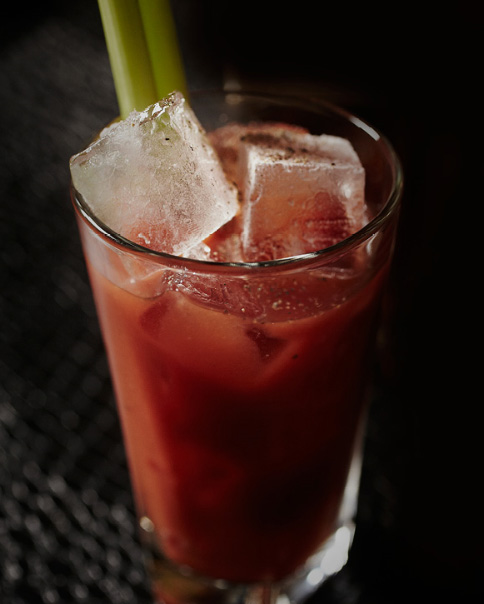
 In 1934 bartender of the hotel bar Fernand Petiot   invented a drink   which he called the "Red Snapper". It has since become known around the world as the Bloody Mary.

On April 4 , 2012 the St. Regis held a small dinner in the hotel library to commemorate the 100th anniversary of the Titanic's sinking. The guests, who included some of Astor's descendants, were dressed in fur and feathers as they perused his books and dined on food inspired by the last meal served aboard the ship. 

Astors-Landlords of New York. Waldorf Astora. Part2

Waldorf-Astoria on  Park Avenue between East 49th and 50th Streets was built in 1931. I told about the history  of the hotel  and the prominent Astor  family ,  known as “the landlords of New York” in  the first Post about “Waldorf-Astoria” and  “En Emanuel” synagogue.


President Herbert Hoover delivered a radio broadcast commemorating the opening of the hotel and congratulating its owners.   He said: “The opening of the new Waldorf-Astoria is an event in the development of hotels even in New York City. It carries on a great tradition in national hospitality. A long line of constantly improving hotels from that day to this has marked the measure of the Nation's growth in power, in comfort, and in artistry”.

There were under two thousand rooms in the hotel, making it  largest hotel in the United States when it was open. The new hotel  has a handsome corridor an a restaurant which was built to captured the spirit  of the fabled promenade in the old Waldorf “Peacock Alley”. 

The Waldorf Towers has its’ own private entrance and elevator lobby on Fiftieth Street and is used exclusively for long-term tenants.  The Towers have 115 suites and 90 rooms on the 28th to 42nd floors. President Hoover  lived in New York in the suite 31-A  for 30 years of the Waldorf Towers after departure from the White House and had a personal waiter.
Every president since Herbert Hoover has stayed in the presidential suite.  The President  suite on the 35th floor includes four bedrooms, and the hotel hand-monograms towels for the first lady and president when they visit.
The hotel has its own railway platform (Track 61)  as part of Grand Central Terminal, used by the president Franklin D. Roosevelt.   An elevator  large enough for Franklin D. Roosevelt's automobile provides access to the platform.

When President Bush was in the hotel in 2003 seeking international support for the U.S. resolution on Iraq, the Secret Service arranged for the Metro-North train to be parked at an abandoned platform, always running and ready for instant departure.
 Queen Elizabeth II, General Charles de Gaulle,   Nikita Krushchev, David Ben-Gurion were among the gusts of the Hotel.

The International Debutante Ball at the Waldorf-Astoria is held every even year in December to formally introduce young high society women. The Ball, founded in 1954, is the most prestigious and the most exclusive debutante ball in the world. Three quarters of debutantes are from US.  France, England, Italy and Germany are represented most frequently.  Each debutante has to be escorted by two men: one United States Military Academy cadet and one American civilian.  28 girls   from all over the world took part in the 2012 Ball.  The price was $16000.Among  the notable past debutantes are the daughter of President Richard Nixon and American fashion designer Vera Vang, the daughter and granddaughter of Malcolm Forbes, the publisher of Forbes magazine, and princesses Natalya and Octavia Obolensky, great-great-great-great daughters of John Jacob Astor
 
Waldorf salad — a salad made with apples, walnuts, celery, grapes, and mayonnaise or a mayonnaise-based dressing — was first created in 1896 at the Waldorf in New York City by Oscar Tschirky, known throughout the world as Oscar of the Waldorf, who was the maître d'hôtel.
There is a new lush green garden  on the roof filled with planting beds of different vegetables and herbs. There are also six hives brimming with thousands of honey bees. This summer (2013) marks the second year the hotel is harvesting its own honey.
During 2006, the Hilton Hotels Corporation   introduced the luxury brand Waldorf=Astoria Collection. The first three additional member hotels were in  Arizona, Phoenix  on   Maui  and   in California.

Astors-Landlords of New York. Waldorf Astoria. Part 1


Waldorf-Astoria that sits on posh Park Avenue between East 49th and 50th Streets.   Every president of United States after 1931 ( the year when the current Waldorf-Astoria was built) was the guest of the hotel.  Waldorf-Astoria   was built by two Astor cousins. This famous hotel is  not the first hotel in new York that was built by Astor.  The first one was built by the founder of the family   John Jacob Astor, who came to America in 1763 from Germany and made a fortune  in fur-goods  trading. 
 At the beginning on the XIX century Astor started buying and renting land. His motto was “never sell,” and he didn’t. He assembled the building lots around his former house and opened hotel in 1836 on the west side of Broadway between Vesey and Barclay Streets. There were more than 300 rooms in 6 floors. The hotel had its own gas manufacturing plant that supplied gas lighting for the building.  A steam engine in the basement ran a pump that provided water to all floors and powered machinery in the kitchen and laundry.   There were 17 bathrooms and 2 showers.
The running water for these facilities was provided by the   reservoirs in the attic.  The price was $2 per day. President Abraham Lincoln, Grand Duke Alexis , Admiral Farragut  and Charles Dickens slept here. The southern section of the hotel was demolished in 1913 because of the subway building.  The rest of the house was shattered in 1926 and the Transportation building was built.

In 1827   William Backhouse  Astor, son of   John Jacob Astor I, who inherited the major portion of the estate, purchased a  farm north of the city and built a small brick house  at the corner of Fifth Avenue and 34th Street.  Within a few decades Astor’s section of the land became the most prestigious residential district in the United States.  William Backhouse Astor was the wealthiest person in the U.S  - he more than doubled the family fortune. After Williams’ death , the Fifth Avenue property was passed to his sons. 

In early 1880s one of Williams’ grandsons, William Waldorf Astor  opened the 13-story Waldorf Hotel on the site, which had formerly boasted his mansion, at Fifth Avenue at 33rd Street.
 Later William moved to London and become a British subject in 1899.  He accepted a peerage of the United Kingdom and was elevated to the rank of Viscount.  In 1908 he opened hotel  in London,  known now as “Waldorf Hilton” now.   The “Waldorf  hotel “ in New York had 17 stores, and was designed by the same architect   who later designed the Plaza Hotel in 1907.
There was a long corridor connecting two of the most popular restaurants in Waldorf, the Palm and the Empire rooms.  Almost from the opening, the corridor was a popular promenade for ladies of fashion to display their gowns and jewelry. The society editor of the New York Tribune called it “Peacock Alley”.
Four years later his cousin, John Jacob Astor IV built 17-story Astoria Hotel an adjacent site.  John Jacob  had a lavish house on the corner of 5th Avenue and East 65. El Emanuel  temple  occupies this lot now.  You can find more about  El Emanuel   in one of my posts.
 
 The hotels were initially built as two separate structures, but the architect planned the Astoria so it could be connected to the Waldorf by the “Peacock Alley”.  The combined  hotel was originally known as The Waldorf-Astoria with a single hyphen, as recalled by a popular expression and song, "Meet Me at the Hyphen."  The first words of the song are “At the Waldorf hyphen  Astoria no matter who or what you are”.
The sign was changed to a double hyphen (Waldorf=Astoria)   by Conrad Hilton when he purchased the hotel in 1949.  Hyphen  completely removed from the hotel name  in  2009.
 

The combined Waldorf-Astoria was  the largest and the tallest hotel in the world at the time. It was the first hotel to offer room service  and was the first hotel to offer permanent living spaces in its suites. The Waldorf-Astoria   was the first hotel to put an end to the old-fashioned Ladies’ Parlor rule and ladies can have dinner in the same room as gentlemen.


In 1929 the original hotel was sold to Bethlehem Engineering Corporation and  torn down   to make room for the Empire State Building.  Former Waldorf manager Lucius M. Boomer had retired to Florida after the demolition  but he retained exclusive rights to the name, which he transferred to the new hotel. Boomer died in an airplane crash in 1947 and Conrad Hilton bought The Waldorf Astoria in 1949. The new Waldorf-Astoria was opened to the public on October 1, 1931. 
 
Learn More about the history of the hotel from New York City History